
Let’s be honest about the state of Accounts Payable (AP) in most businesses: it’s where efficiency goes to die. You have a stack of PDFs in one folder, an email thread with “URGENT: Approve This” in the subject line, and a CFO who can’t get a clear picture of cash flow because half the invoices are stuck on someone’s desk while they’re on vacation. We’ve spent so much time optimizing customer-facing funnels and SEO strategies that we often forget the backend engine that keeps the lights on.
If your finance team is still manually keying in invoice numbers or walking down the hall to ask for a signature on a PO match, you’re not just wasting time you’re bleeding money and introducing human error into the very heart of your business.
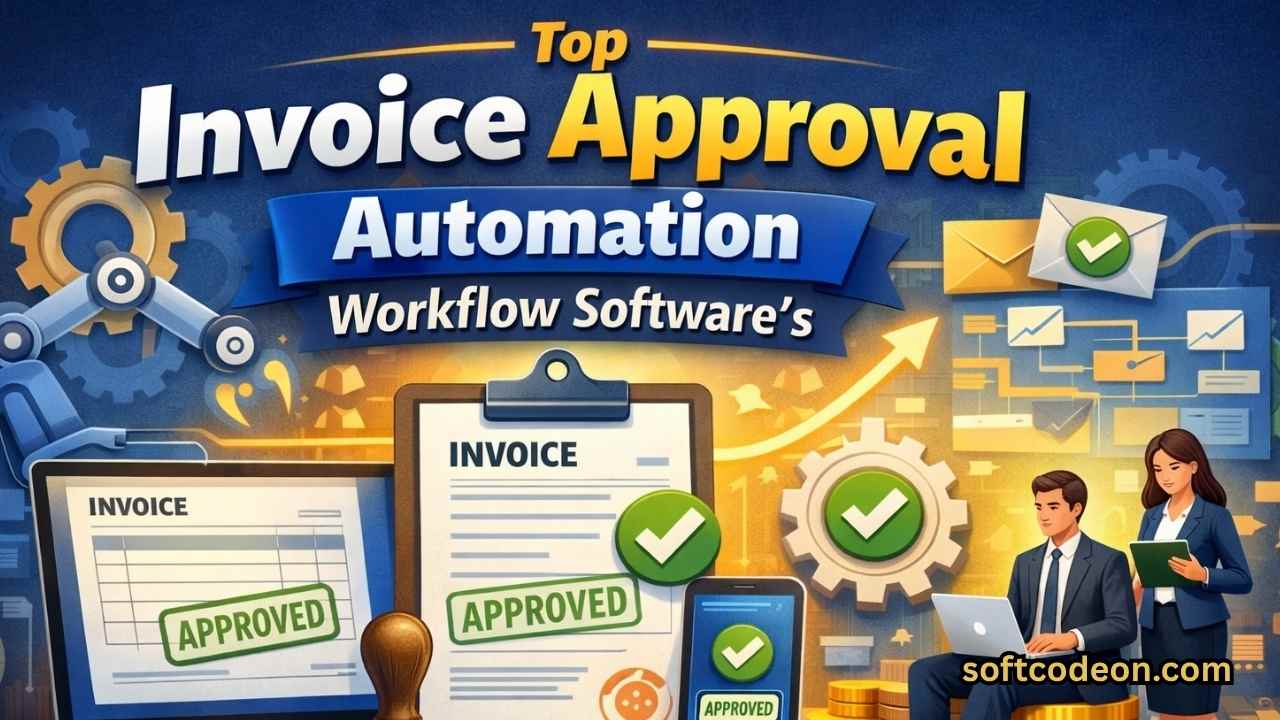
Enter the new generation of Invoice Approval Automation Workflow Softwares. And no, this isn’t just about digitizing a piece of paper. In 2026, this space has been completely reshaped by Generative AI and deep ERP integrations. We’re talking about systems that don’t just route a document; they read it, code it to the correct GL account, check it against the contract, and flag suspicious activity before a human even glances at it.
This guide cuts through the noise to give you the definitive top 10 tools for 2026, ranked for real-world usability, AI smarts, and integration depth.
Why Manual Invoice Workflows Are a Silent Business Killer
Before we dive into the software list, we need to address the elephant in the room: the true cost of doing nothing. Many small business owners think automation software is a “nice-to-have” luxury. They’d rather spend that budget on another ad campaign. But here’s the reality: manual invoice approval is a silent drain on your net profit.
The Hidden Cost of Paper and Email Approvals
A recent study by Levvel Research shows that the average cost to process a single paper invoice ranges from $12 to $30. When you switch to a fully automated workflow, that cost plummets to under $4. Where does that money go in a manual system? It’s the salary of the AP clerk spending 15 minutes cross-referencing spreadsheets, it’s the cost of the overnight envelope, and it’s the late fee you paid to NetSuite or Salesforce because the invoice got buried in a spam folder. Beyond the hard costs, there’s the security risk. How many times has a fake invoice or a phishing attempt disguised as a vendor request landed in the accounting inbox? Invoice approval automation software acts as a gatekeeper, validating bank details and matching POs instantly.
Why 2026 is the Tipping Point for AP AI
In previous years, automation meant rigid, rule-based workflows (“If Amount > $5,000, Send to Bob”). In 2026, we’ve moved into the era of autonomous AP. Tools are now leveraging the same type of Large Language Models (LLMs) that power content creation to actually understand the context of an invoice. For instance, modern systems can read a line-item description “Consulting for Q2 SEO Strategy” and automatically suggest coding it to Marketing - SEO Services based on your company’s historical data. This is a massive leap forward in reducing the manual data entry that plagues month-end close.
As we’ve discussed before regarding how Generative Engine Optimization is reshaping SEO, the underlying AI technology is permeating every software category and AP is one of the biggest beneficiaries.
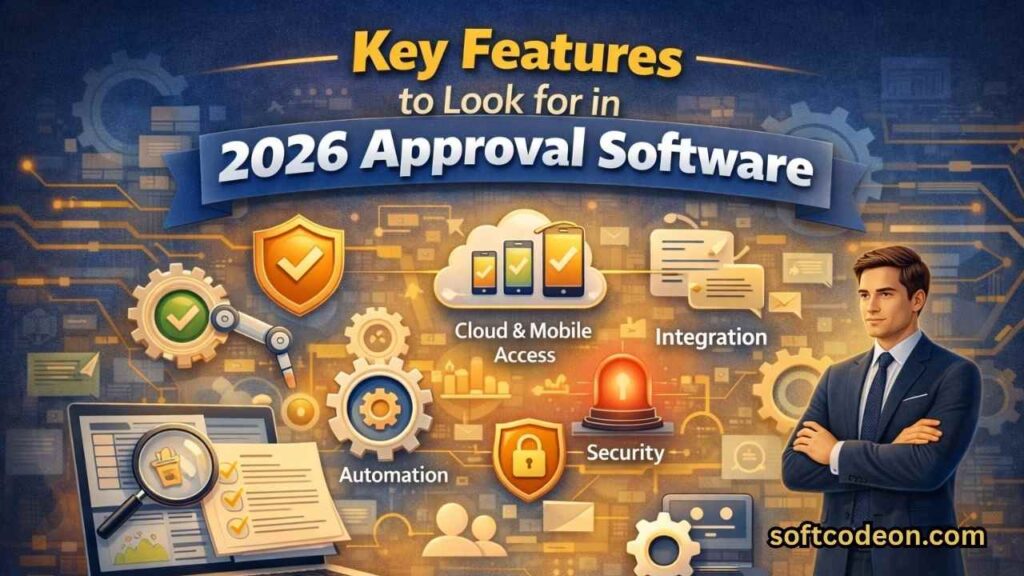
Key Features to Look for in 2026 Approval Software
Not all automation is created equal. A simple Zapier workflow can move a file, but it can’t understand accrual accounting. Here are the non-negotiable features you should demand from any vendor on this list.
AI-Powered Data Extraction and GL Coding
The core of any AP automation tool is its ability to read an invoice without human typing. In 2026, this has evolved far beyond simple Optical Character Recognition (OCR). We’re now dealing with “Cognitive Capture.”
Today’s leading software uses machine learning models specifically trained on global invoice formats. It doesn’t matter if the vendor is from Germany with a complex VAT structure or a US freelancer using a PayPal summary the AI identifies the Invoice Number, Date, Amount, and Line Items with over 99% accuracy. More importantly, AI-suggested GL Coding learns from your history. If you consistently code “Slack Subscription” to Software Expense, the system will do it automatically next time, only flagging exceptions for human review. This cuts processing time from days to minutes.
Multi-Level Approval Chains and Conditional Routing
Your business isn’t a straight line, so your approvals shouldn’t be either. Modern workflows are dynamic and based on real-time business logic.
Gone are the days of fixed “Manager > Director > CFO” chains. In 2026, workflows are conditional. The system should allow you to set rules like: *If Vendor = “Apple Inc.” AND Amount > $1,000, then Route to IT Manager for Budget Check BEFORE sending to Finance*. Or If Project Code = “Client-XYZ” then require Client Lead Approval. The best tools visualize these workflows as drag-and-drop flowcharts, making it easy for a non-technical finance manager to change the approval matrix when a new department head is hired or a new budget threshold is implemented.
Seamless ERP and Accounting Software Sync
An automation tool that lives in a silo creates just as much work as it saves. The gold standard is a bi-directional sync with your main system of record.
Whether you’re on QuickBooks Online, Xero, Sage Intacct, or Microsoft Dynamics, the software must sync Vendor Master Files automatically. When an invoice is approved in the workflow tool, the bill should be created in your ERP with the payment status marked “Ready to Pay” instantly. This eliminates the dreaded “double entry” where an AP clerk approves a bill in one system and then has to manually re-type the entire thing into the accounting system. This integration is the single biggest factor in achieving a 3-day month-end close versus a 12-day close.
Fraud Detection and Duplicate Invoice Alerts
According to the Association of Certified Fraud Examiners, billing schemes are among the most common forms of occupational fraud. Automation provides a critical layer of defense.
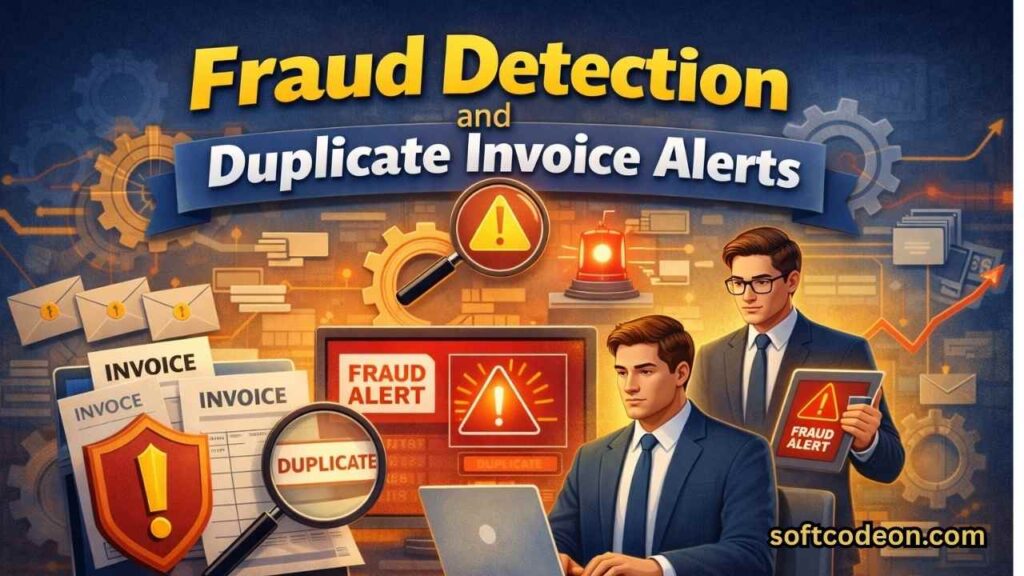
Modern invoice approval automation software uses algorithms to flag anomalies. It checks the bank account number against a database of known fraudsters. It performs fuzzy matching on invoice numbers to prevent a vendor from accidentally (or intentionally) submitting the same bill twice with a slight typo (e.g., INV-001 vs. INV-00I). The system will also alert you if a payment amount is 300% higher than the average for that specific vendor over the last 12 months. For businesses that are scaling quickly, this feature alone justifies the monthly subscription cost.
The Top 10 Invoice Approval Automation Workflow Softwares for 2026
Here is the curated list, ranked based on user experience, AI maturity, and value for the mid-market and enterprise (with options for SMBs).
| Rank | Software | Best For | Standout AI Feature | Starting Price (Est. 2026) |
|---|---|---|---|---|
| 1 | Tipalti | Global Mass Payouts & Compliance | Tax Form Validation (W-8/W-9) & Sanctions Screening | $149/mo (Platform Fee) |
| 2 | Stampli | Ease of Use & ERP Collaboration | Billy the Bot – Conversational AI Coding | Custom Quote |
| 3 | Bill.com (Bills) | SMB Accounting Firm Synergy | Automated 2-Way Sync w/ QuickBooks/Xero | $45/user/mo |
| 4 | Airbase | Spend Management & Corporate Cards | Real-Time Approvals at Point of Swipe | Custom Quote |
| 5 | SAP Concur Invoice | Large Enterprise / SAP Users | Deep Native SAP S/4HANA Integration | Custom Quote |
| 6 | Navan (formerly TripActions) | Travel & Expense Fusion | Unified Policy Engine for T&E + Invoices | Free (Platform Fee for Cards) |
| 7 | Melio | Small Business Cash Flow | Instant Bank Transfers (No ACH Delay) | Free (Pay-to-Use Fees) |
| 8 | Ramp | Tech Startups & Venture-Backed | Price Intelligence (Vendor Cost Benchmarking) | Free (Software) |
| 9 | AvidXchange | Mid-Market Construction/Real Estate | AvidPay Network (Vendor Enablement) | Custom Quote |
| 10 | Coupa | Procurement-Led Organizations | Supply Chain Risk Analysis | Custom Quote |
1. Tipalti: The Global Finance Automation Powerhouse
For businesses with international contractors, affiliate payouts, or complex multi-entity structures, Tipalti is often the only viable option. It’s less about simple approval and more about global compliance.
Tipalti shines where others stumble: cross-border payments. If you’re running a large-scale blog network with writers in the Philippines, developers in Ukraine, and an editor in Brazil, Tipalti automates the collection of tax forms (W-9, W-8BEN) and validates VAT IDs before a single invoice is even approved. Their Invoice Management module uses AI to read invoices in over 30 languages and automatically reconciles them against Purchase Orders. The real value lies in their PO-based approval engine; if an invoice matches the PO and the goods receipt, it auto-approves without a single human click. This is crucial for maintaining tight financial controls as you scale content operations globally.
2. Stampli: The Collaborative AP Revolution
Stampli solves the single biggest bottleneck in AP: communication. Most invoice issues aren’t with the data; they’re with the context. Stampli puts the conversation directly on top of the invoice image.
Imagine this: You get a $12,000 bill for “Consulting Services.” The AP clerk has no idea who authorized this. In a traditional workflow, they email the department head, who forwards it to the project manager, resulting in a mess of “RE: FW: RE: Invoice Question” threads. Stampli replaces that with a centralized communication hub. Their AI, affectionately named Billy the Bot, analyzes past behavior. If the invoice is for a specific marketing campaign, Billy might automatically tag the Marketing Director in the comments section before the invoice even hits the approval queue. This contextual awareness drastically reduces “touch time.” Stampli is often the top choice for companies migrating off manual processes because it mimics how humans actually solve problems.
3. Bill.com: The SMB Accounting Standard
Bill.com is the industry standard for small-to-medium businesses, largely due to its deep, almost telepathic connection with QuickBooks Online and Xero.
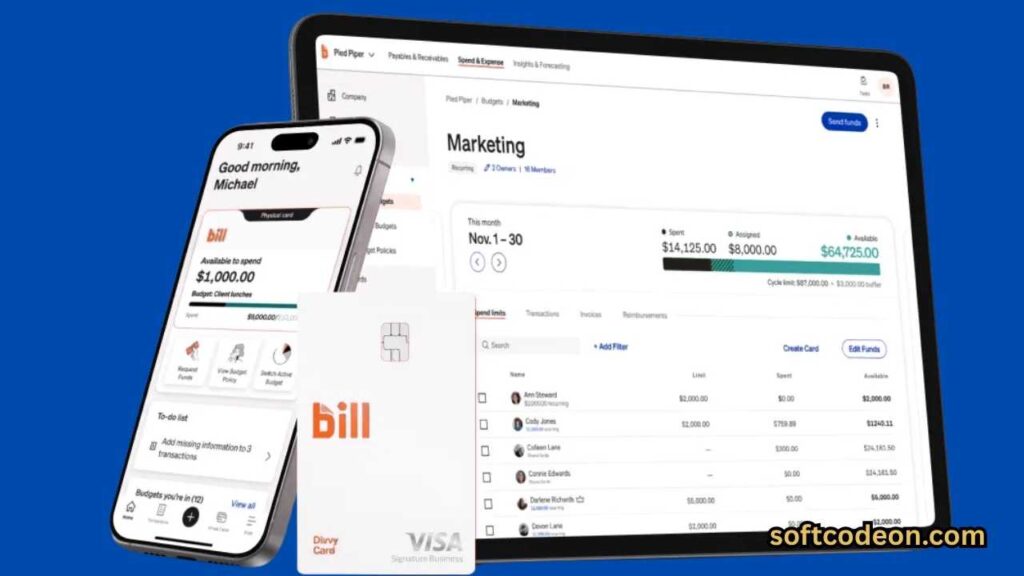
If you have a bookkeeper or an external CPA, they are already using Bill.com. The platform simplifies the inbox by giving every vendor a unique @bill.com email address to send PDFs to. The Smart Inbox uses AI to separate actual bills from statements and junk mail. In 2026, Bill.com has refined its approval policies to allow for Delegated Approval. This means a VP can temporarily delegate their approval authority to an assistant while they are on a plane without having to share their login password a small but critical governance feature that prevents audit findings.
While the interface feels slightly dated compared to newer tools, the reliability of the sync with Intuit’s ecosystem makes it unbeatable for straightforward US-based AP. For those of you monetizing websites and managing numerous small SaaS subscription invoices, this is the sweet spot. The streamlined process here contrasts nicely with the more complex setups you’d use for something like top WordPress hosting providers where payment terms are simpler.
4. Airbase: The Unified Spend Control Platform
Airbase challenges the notion that “Approval” only happens after you receive the bill. They focus on controlling spend before it happens, integrating virtual corporate cards directly into the approval workflow.
Airbase is ideal for fast-growing tech companies and agencies that trust their employees with a credit card but need ironclad guardrails. An employee can request a virtual card for a specific vendor (say, a $500 limit for a new AI tool to make money online). The approval for the card is the pre-approval for the invoice. When the vendor charges the card, the receipt is automatically matched, and no further approval is needed. For non-card spend (e.g., a wire transfer for a large contractor), the invoice approval workflow is seamless and integrated with the same ledger.
The platform’s 2026 update includes “Automated Accruals,” which recognizes expenses in the correct period even if the payment hasn’t cleared a lifesaver during audit season.
5. SAP Concur Invoice: The Enterprise Fortress
If your organization runs on SAP, looking outside the ecosystem is often more trouble than it’s worth. Concur Invoice is the natural extension of the ubiquitous travel and expense tool.
Concur Invoice is not the prettiest software on this list, but it is the most formidable in terms of policy enforcement. It allows for extremely granular approval flows based on cost objects, cost centers, and internal orders. The 2026 version leverages SAP Business AI to perform a “Predictive Approver” analysis. Based on the invoice data, it suggests the correct 5-10 people who could approve it and highlights the one who should based on their workload and expertise. For global enterprises dealing with inter-company billing and complex VAT reclaim, this level of sophistication is mandatory.
6. Navan (formerly TripActions): The T&E Invoice Hybrid
Most companies treat Travel & Expense (T&E) and Accounts Payable (AP) as two separate worlds. Navan smashes them together into a single, unified policy engine.
If a significant portion of your invoices are related to events, hotels, or marketing swag, Navan is a game-changer. An employee books a hotel through Navan, and the folio (invoice) is automatically generated and matched to the trip. The approval happens once: at the time of booking. Navan’s AI then looks at non-travel invoices (like a Zoom subscription) and applies the same spending policies. The 2026 platform now includes Dynamic Policy Adjustment. If the company is having a tough quarter, the CFO can dial up the approval strictness with a single slider, requiring VP approval for all invoices over $100 instead of the usual $500.
7. Melio: The SMB Cash Flow Maximizer
Melio has carved out a niche for businesses that want to delay cash outflow while still paying vendors on time. It’s the ultimate tool for managing working capital.

Melio is unique because it acts as a payment gateway integrated with approval workflows. You approve a bill to be paid via ACH bank transfer (which usually takes 3-5 days to clear your bank). Melio debits your bank account instantly via a faster method and sends the vendor a check or ACH on your timeline. For vendors who prefer paper checks, Melio mails it for you. This decoupling of approval and settlement gives small business owners breathing room. The approval process is straightforward: you invite your partner or manager via email, they click a link, review the bill details, and approve. No passwords, no downloads.
8. Ramp: The AI-Powered Finance Assistant
Ramp started as a corporate card company but has aggressively built out an AP automation suite that rivals dedicated software and they give the software away for free.
Ramp makes money on interchange fees from card spend, not software subscriptions. This means you get a world-class Invoice Approval Automation Workflow at zero platform cost. Ramp’s AI is particularly good at Price Intelligence. When you upload an invoice for “Adobe Creative Cloud,” Ramp’s AI cross-references that line item against anonymized data from thousands of other Ramp customers. It will tell you, “You are paying 20% more per seat than similar companies. Consider switching to annual billing to save $2,400.” For a bootstrapped business watching every dollar, this kind of proactive insight is invaluable.
9. AvidXchange: The Industry Specialist
While many tools on this list are horizontal (built for any industry), AvidXchange goes deep on verticals like Real Estate, Construction, and HOA Management.
The complexity of approvals in construction is unique. You have lien waivers, retainage, and complex job costing. AvidXchange’s Invoice Accelerator allows subcontractors to upload invoices directly to a portal. The system checks for valid insurance certificates and signed contracts during the approval process. It also manages the approval of Pay Applications (Pay Apps), which is a specific workflow requirement for capital projects that generic tools like Bill.com cannot handle natively.
10. Coupa: The Source-to-Pay Leader
Coupa is the 800-pound gorilla in procurement. If your business requires a formal sourcing event before an invoice is ever generated, Coupa is the answer.
Coupa’s strength is in contract compliance. The approval workflow is not just about the dollar amount; it’s about, “Is this invoice compliant with the Master Services Agreement we signed last year?” Coupa’s AI, powered by community intelligence, flags if a vendor is charging a line item that wasn’t on the original PO or if the rate has increased beyond the agreed-upon cap. For large enterprises managing tens of thousands of vendors, this prevents “scope creep” leakage.
How to Choose the Right Software: A 4-Step Framework
Choosing software is like buying a pair of shoes. A pair that fits a marathon runner perfectly will give a sprinter blisters. Here’s a simple framework to narrow down the list above.
Step 1: Assess Your Integration Non-Negotiables
Start with your accounting system. This is non-negotiable. A beautiful UI means nothing if you have to export CSVs and re-import them into your ERP.
If you use QuickBooks Desktop (not Online), your options are severely limited (Bill.com remains one of the few). If you use NetSuite, you’ll want Stampli or Tipalti for their deep, bundle-ready integrations. Don’t trust marketing claims about “sync.” Ask for a demo where they show you exactly how a Partial Payment or a Credit Memo syncs. This is where most integrations break.
Step 2: Calculate Your True Cost of Approval Delay
How much is a one-week delay in approvals costing you? For some, it’s late fees. For others, it’s missing out on early payment discounts like 2% Net 10.
If you regularly receive 2% 10, Net 30 terms, you cannot afford a slow manual approval process. Let’s do the math:
- Invoice: $10,000
- 2% Discount: $200 savings.
If you process just 25 invoices like this a month, that’s $5,000 in monthly savings more than enough to pay for enterprise-grade software. Tools like Melio and Ramp excel at getting you that discount by auto-approving low-risk invoices based on PO matches.
Step 3: Evaluate the Mobile Experience for Approvers
Your CFO or CEO is the biggest bottleneck. If they can’t approve an invoice from their phone while waiting for coffee, the system fails.
Test the mobile app. Can the approver see the actual invoice image clearly on a small screen? Can they zoom in on the line items without pinching and squinting? Can they add a comment like “Wait, why is this so high?” and send it back? Stampli and Ramp have the best mobile experiences in 2026, designed specifically for the executive who never opens a laptop.
Step 4: Future-Proofing with AI Capabilities
Don’t buy software based on what it does today; buy it based on its roadmap for tomorrow. In 2026, that means AI.
Ask the vendor: “What happens when an invoice doesn’t match the PO?” In 2023, the answer was, “It goes to an exception queue.” In 2026, the answer should be, “The AI drafts an email to the vendor asking for clarification on line item 4 and CC’s the project manager automatically.” This is the level of automation that separates the top 5 tools on this list from the rest.
Conclusion
As we navigate the financial landscape of 2026, the days of manually keying invoices and chasing signatures are not just inefficient they are a competitive disadvantage. The Top 10 Invoice Approval Automation Workflow Softwares listed here represent a spectrum of solutions, from the AI-driven compliance fortress of Tipalti to the cash-flow-friendly simplicity of Melio. The common thread weaving through all of them is the ability to turn a messy, human-dependent process into a clean, auditable, and accelerated machine.
Remember, the goal of implementing this technology isn’t to replace your finance team; it’s to elevate them. By removing the soul-crushing drudgery of data entry and email tag, you free up your best financial minds to focus on what truly matters: analyzing trends, forecasting growth, and strategizing for the future. If you’re scaling content sites, managing affiliate payouts, or just trying to keep your agency lean, the right AP tool is as vital as your SEO stack. The time saved on approvals is time you can reinvest into creating content that ranks, building backlinks, and writing the kind of detailed reviews like our piece on the 2025 Royal Enfield Hunter 350 that your audience loves.
Stop letting the back office be the bottleneck. Pick a tool, run a pilot, and watch how much smoother the cash flows.
For further reading on financial tech and operational efficiency, you can refer to the latest 2026 AP Automation Benchmark Report by Ardent Partners