
The video-first YouTube or Vimeo on internet is no longer a prediction; it is the current reality. For businesses, from local startups to global enterprises, video content is the most effective tool for storytelling, marketing, and education. However, before you hit the record button, a critical strategic question arises: Where do you host your content? The debate between YouTube and Vimeo is one of the oldest in the digital marketing playbook, but in 2026, the stakes are higher than ever. Choosing the wrong platform doesn’t just affect your views; it impacts your brand perception, your SEO, and ultimately, your bottom line.
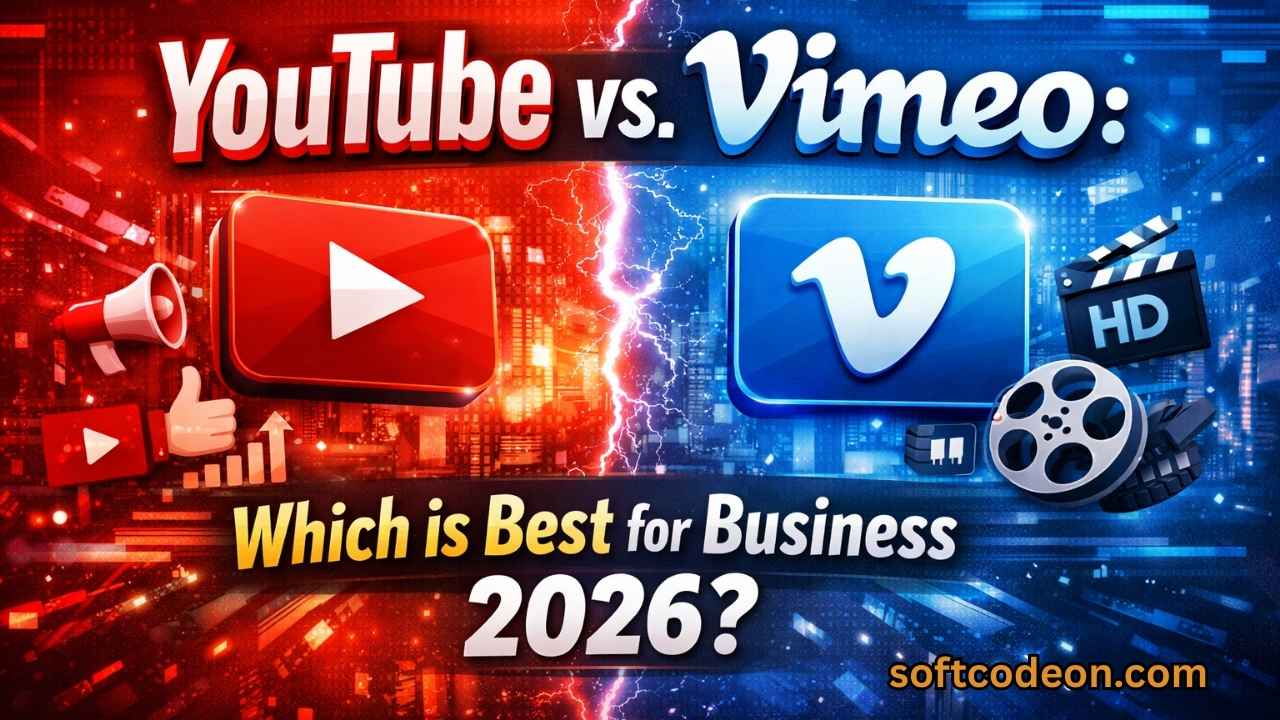
While both platforms allow you to upload and share videos, they serve vastly different purposes. YouTube operates like a bustling city square, built for discovery and mass appeal. Vimeo, on the other hand, is more like a private gallery, designed for showcasing high-quality work in a professional, distraction-free environment. To determine which platform deserves a spot in your digital marketing strategy, we need to move beyond the surface level and analyze how each aligns with specific business objectives. Let’s dive deep into the nuances of YouTube versus Vimeo to help you make an informed decision in 2026.
Understanding the Core Philosophies
Before comparing features, it’s vital to understand what drives each platform. Their fundamental purposes dictate their strengths and weaknesses. YouTube is a social search engine owned by Google, while Vimeo is a video hosting platform with robust business tools.
YouTube | The Discovery Giant
YouTube is the world’s second-largest search engine and a behemoth of social media. Its primary goal is to keep users on the platform for as long as possible through algorithmic recommendations. For businesses, this offers unparalleled reach. If your goal is to go viral, build a broad subscriber base, or rank in Google search results, YouTube’s ecosystem is unmatched. It thrives on consistency, volume, and community interaction through comments and live streams. The platform’s algorithm favors watch time and engagement, pushing content that keeps viewers hooked.
Vimeo | The Professional’s Choice
Vimeo has always positioned itself as the premium, ad-free home for creatives and businesses. Unlike YouTube, Vimeo doesn’t rely on an algorithm to suggest “what’s next” from a library of unrelated content. Instead, it focuses on providing high-quality playback, advanced privacy controls, and detailed analytics. For a business owner, Vimeo feels less like a crowded marketplace and more like a secure, branded portfolio. It is the go-to platform for hosting behind-the-scenes content for clients, internal training videos, or high-stakes sales presentations where professionalism is key.
Audience Reach and SEO Implications
Visibility is often the deciding factor for businesses. How do these platforms help new customers find you? The answer lies in their vastly different approaches to search and discovery.
The Power of Google Integration
Since YouTube is owned by Google, its videos frequently appear at the top of search engine results pages (SERPs). If you create a video tutorial about the importance of SEO in digital marketing, there is a high probability that a YouTube video will rank on the first page, even above your own website. This provides a massive advantage for driving organic traffic. YouTube acts as a powerful lead generation tool because it is designed to be found.
Vimeo and Private Sharing
Vimeo takes a different approach. Its videos are not prioritized in Google search results in the same way YouTube videos are. While you can make Vimeo videos public and embed them on your site, the platform is not optimized for discovery. Instead, its strength lies in private sharing and gated content. For instance, if you are using digital marketing methods to pitch a high-value client, you can upload a proposal video to Vimeo and password-protect it. This ensures only your prospect sees it, rather than it being lost in a sea of public content. It’s about control, not reach.
Video Quality and Customization
When a potential customer clicks play, the viewing experience matters. A pixelated video or one surrounded by distracting ads can harm your brand’s credibility. Here’s how the two stack up regarding the user experience.
The Distraction-Free Experience
One of the most significant differences is the presence of ads. On YouTube, unless you are a paid subscriber, viewers are subjected to pre-roll, mid-roll, and display ads. For a business, this can be detrimental. Imagine showcasing a sleek product demo, only for it to be interrupted by a competitor’s ad. Vimeo, on the other hand, is completely ad-free. This creates a premium, uninterrupted viewing experience that is essential for high-end brands. Furthermore, Vimeo offers superior video compression, meaning your 4K footage looks crisp and professional, which is crucial for industries like real estate or fashion where visual fidelity is paramount.
Player Customization and Branding
Vimeo wins hands down when it comes to white-labeling and customization. You can remove the Vimeo logo, customize the color of the play button, and even set up a branded video gallery on your own website. This aligns perfectly with the on-page SEO guide to boost organic traffic, as a seamless user experience on your site reduces bounce rates and keeps visitors engaged. YouTube embeds are functional but always carry YouTube’s branding and will inevitably suggest other videos at the end, potentially luring viewers away from your site. With Vimeo, the “end screen” can be a call-to-action or a link back to your services, keeping the traffic funnel contained.
Privacy, Security, and Marketing Tools
For B2B companies and enterprise-level marketing, privacy is non-negotiable. The tools you use to host your sales decks and training modules must be secure and provide actionable insights.

Advanced Privacy Controls
Vimeo offers granular privacy settings that YouTube simply cannot match. You can restrict viewing by domain (so a video only plays when embedded on your specific website), by password, or even by SSO (Single Sign-On) for internal company use. This is invaluable for internal communications. For example, if you are using a proven way to make money with digital marketing by launching an exclusive coaching program, you can host the course videos on Vimeo and ensure they are never publicly accessible without a login. YouTube’s “unlisted” option is a weak alternative for sensitive content.
Analytics Beyond Views
Both platforms offer analytics, but they serve different masters. YouTube Analytics is excellent for understanding audience retention, demographics, and how users discovered your video via search. It is tailored for content creators looking to please the algorithm. Vimeo’s analytics, however, are business-centric. They tell you exactly which companies (based on IP addresses) are watching your videos and how much of the video each viewer watched. This is a game-changer for sales teams. You can see if a potential client watched your entire product explainer video, allowing you to time your follow-up call perfectly. This level of insight is crucial for high-ticket sales.
Monetization and Business Models
How do you plan to make money from your video content? Both platforms allow you to generate revenue, but through different mechanisms.
YouTube Partner Program and Ads
YouTube’s primary monetization method is the Partner Program, which allows creators to earn money from advertisements placed on their videos. To qualify, channels need 1,000 subscribers and 4,000 watch hours. For businesses, this can create a secondary revenue stream. Additionally, YouTube offers channel memberships and Super Chats for live streams, fostering a community-funded model. If your business relies on consistent, high-volume content (like product reviews or vlogs), YouTube’s ad revenue can offset production costs.
Vimeo’s Direct-to-Consumer Tools
Vimeo takes a more direct sales approach. With Vimeo OTT (Over-The-Top), businesses can create their own subscription-based streaming service. This is perfect for fitness instructors, filmmakers, or educational institutions that want to sell access to their library. You aren’t sharing revenue with advertisers; you are keeping the subscription fees (minus Vimeo’s cut). Furthermore, Vimeo allows for transactional video-on-demand (TVOD), where users can rent or buy individual pieces of content. This aligns with the growing trend of OTT digital marketing in 2025 and beyond, giving businesses complete control over their pricing and customer data.
The 2026 Verdict: Which One Should You Choose?
There is no single “best” platform; there is only the right tool for the right job. Your choice depends entirely on your business objectives. To help visualize the decision, here is a quick comparison table:
| Feature | YouTube (The Discovery Engine) | Vimeo (The Professional Host) |
|---|---|---|
| Primary Goal | Reach, Discovery, Community | Showcase, Privacy, Sales |
| Search Ranking | Excellent (Owned by Google) | Low (Not optimized for SEO) |
| Viewing Experience | Ad-supported, distracting | Ad-free, premium quality |
| Privacy | Basic (Public, Unlisted, Private) | Advanced (Password, Domain lock, SSO) |
| Analytics | Content performance & Demographics | Sales intelligence (Who watched?) |
| Monetization | Ad revenue, Memberships | Subscription (OTT), Rentals |
| Best For | Brand awareness, Vlogs, Tutorials | Client work, Courses, Internal training |
When to Choose YouTube
Choose YouTube if your primary goal is brand awareness and reach. If you are publishing “how-to” content aimed at solving common problems, YouTube is your best friend. It acts as a top-of-funnel magnet, pulling in new audiences through search. It is also the superior platform for building a community and engaging with followers through comments and live streams. If your strategy relies on top SEO techniques to skyrocket your traffic, YouTube is indispensable.
When to Choose Vimeo
Choose Vimeo if your priority is professionalism and control. If you are a creative agency, a real estate agent showcasing luxury properties, or a SaaS company with high-value sales demos, Vimeo presents your work in the best possible light. The ability to password-protect content and see exactly who is watching makes it the ultimate sales enablement tool. It turns your video library from a marketing expense into a secure, revenue-generating asset. For businesses focused on building a passive income stream with blogging or a membership site, Vimeo provides the infrastructure to host and sell that content directly.
Conclusion
In the battle of YouTube vs. Vimeo, the winner is the business owner who understands their specific needs. You don’t necessarily have to pick just one. Many successful companies use a hybrid approach: they use YouTube for its massive reach and SEO benefits to attract new leads, and they use Vimeo to host high-value, conversion-focused content on their website or for client presentations. By leveraging the strengths of both platforms, you ensure that your video content not only reaches a wide audience but also converts that attention into tangible business results. Evaluate your goals, test both platforms, and let your strategy dictate your choice.