


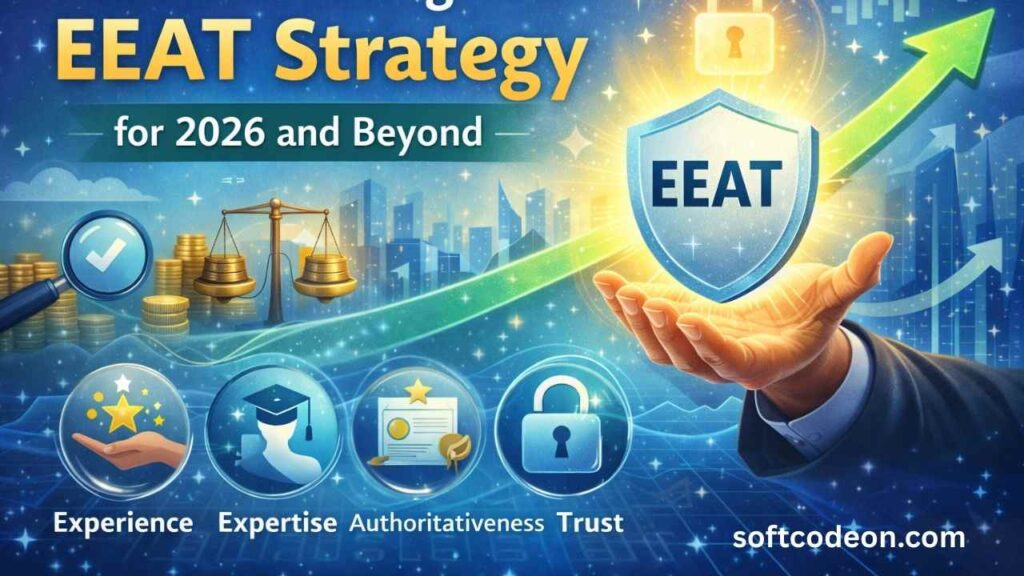
Today’s in Google Search, establishing trust is no longer a luxury it’s a necessity, especially for Your Money Your Life (YMYL) websites. These sites cover topics that can significantly impact a user’s health, financial stability, safety, or overall well-being. Now, the baseline for success in this high-stakes arena is a sophisticated mastery of Google’s EEAT framework: Experience, Expertise, Authoritativeness, and Trustworthiness. This framework is not merely a set of guidelines; it is Google’s core algorithm for assessing the credibility of content in fields where misinformation can have serious real-world consequences.
As we move deeper into an era dominated by AI-generated content and sophisticated digital manipulation, Google’s systems are becoming exceptionally adept at distinguishing genuine human expertise from mere keyword optimization. For YMYL site owners, the implications are clear: showcasing genuine, first-hand experience will become the single most critical ranking differentiator. The future belongs to creators who can demonstrate not just knowledge about a topic, but lived experience within it. This article provides a comprehensive, forward-looking roadmap for embedding authentic EEAT signals into every layer of your YMYL site, ensuring it meets the elevated standards of 2026 and builds unshakable trust with both users and search engines.
Understanding the 2026 EEAT Landscape for YMYL Content
The EEAT framework is dynamic, and its application to YMYL content continues to intensify. Google’s Search Quality Raters’ Guidelines treat YMYL pages with the highest scrutiny, requiring a correspondingly high level of EEAT. This will mean algorithms are finely tuned to detect the source of experience, not just its mention. Google’s systems will increasingly cross-reference content with author credentials, real-world reputation signals, and user interaction data to validate claims. For a site discussing financial investments or medical advice, surface-level content that simply aggregates information from other sources will fail. The benchmark is now demonstrable, practical experience that a user can identify within the first few seconds of engaging with your content. This evolution is a direct response to the proliferation of low-quality, mass-produced content, making deep EEAT integration your primary defense against algorithmic obscurity and user distrust.
Why “Experience” Has Become the Cornerstone of EEAT
While Expertise, Authoritativeness, and Trustworthiness are all vital, Experience (the first “E”) has emerged as the most powerful and non-negotiable element for YMYL success. Why? Expertise can be theoretical; authoritativeness can be borrowed; trust can be built over time. But genuine, firsthand experience is inherently unique and difficult to fake. Google’s guidance explicitly states that for many YMYL topics, “the content should be produced with some degree of first-hand experience.” In 2026, this translates to a strong algorithmic preference for content that answers the critical user question: “How do you know this?” Does the author have hands-on experience administering financial portfolios, treating medical conditions, or testing cybersecurity software? This shift elevates practitioners over pure commentators, making it essential for your content strategy to be built on a foundation of real-world application and verifiable practice.
Defining “Experience” in a YMYL Context
For a YMYL site, experience is not about general life experience; it is topic-specific, practical, and applied. It’s the difference between a journalist summarizing a clinical study on diabetes management and a certified diabetes care and education specialist (CDCES) writing about daily patient interactions, personalized insulin response strategies, and long-term lifestyle adjustments. The latter carries the weight of practical, repetitive application of knowledge. This experience must be transparent and demonstrable to the reader. It’s not enough to state “I have 10 years of experience”; the content itself must organically reflect the nuances, challenges, and insights that only come from having performed the task or lived through the situation repeatedly. This depth is what satisfies both users seeking reliable guidance and Google’s quality evaluation systems.
Practical Strategies to Showcase Experience Through Content
Your content is the primary vehicle for conveying experience. Every article, guide, and review must be engineered to communicate practical, lived-in knowledge.
1. Leverage Case Studies and Personal Anecdotes
Integrate detailed, anonymized case studies or relevant personal anecdotes that illustrate your problem-solving process. For a financial advice site, this could be a breakdown of how a specific asset allocation strategy was adjusted for a client during a 2023 market downturn, including the rationale and the outcome. For a health site, it could be a walk-through of a patient’s progression through a treatment protocol, noting observed reactions and adjustments made. These narratives are powerful EEAT signals because they provide contextual, granular detail that is impossible to fabricate convincingly without real experience. They move advice from the abstract to the applied, showing your methodology in action and building a relatable, trustworthy connection with the reader.
2. Implement a “Behind-the-Scenes” or “Methodology” Section
For key YMYL pages, especially product reviews, “best-of” lists, or instructional guides, dedicate a section to transparently explaining your process. In our article on the Best AI Tools to Make Money Online Easily, for instance, we could add a methodology box stating: “Each tool was tested over a 4-week period on live projects; we evaluated output quality, integration ease, actual cost versus advertised price, and customer support response times.” This demonstrates a systematic, hands-on evaluation process. The level of transparency will be expected for any content making comparative or evaluative claims in YMYL spaces, directly signaling experiential depth and rigorous standards.
3. Use Original Data, Screenshots, and Documentation
Nothing validates experience like original evidence. Where possible, generate and present original data from your practice. This could be aggregated, anonymized results from your work, custom charts, or original research. Furthermore, use original screenshots, photos of tools in use, or scans of relevant documentation (with sensitive information redacted). For a site reviewing WordPress hosting providers, original screenshots of GTmetrix or Core Web Vitals scores from your test environment, as discussed in our guide to WordPress Plugins to Boost Website Speed, are a far stronger trust signal than stock images. This tangible proof moves your content from opinion to documented analysis.
Optimizing Author Bios and Bylines for Maximum EEAT Impact
The author byline is a critical EEAT touchpoint. A generic “Admin” or a name without context severely undermines perceived experience.
Crafting a Comprehensive, Credential-Focused Bio
Each author on a YMYL site must have a dedicated, detailed bio page and a rich byline snippet on every article. This bio should explicitly connect the author’s professional experience to the topic at hand. List relevant:
- Professional Certifications: (e.g., CFA, CPA, MD, PhD, CISSP, P.Eng).
- Years of Hands-On Practice: Specify the domain (e.g., “15 years designing enterprise cybersecurity frameworks”).
- Tangible Achievements: Publications, awards, significant projects, or former roles at recognized institutions.
- Direct Contact or Verification Link: A link to a professional LinkedIn profile or a verifiable industry platform profile.
This transforms the author from a name to a credentialed source. For example, an article on our site about SEO Strategy should be authored by someone whose bio details their years managing successful campaigns, directly linking their lived experience to the advice given, much like the depth we aim for in our Expert’s Guide to SEO Rank Higher on Google.
Implementing Schema.org Author Markup
Technically reinforce this credibility by implementing Person schema markup on author bio pages. Include honorificSuffix (e.g., MD, PhD), award, knowsAbout, and affiliation properties. This structured data helps Google’s algorithms directly parse and validate the author’s expertise and experience, feeding directly into EEAT assessments. It’s a silent but powerful backend signal of authority.
Building Site-Wide Authority and Trust (The “A” and “T” in EEAT)
Experience and expertise must be housed within an authoritative and trustworthy website framework. A single strong article is not enough; the entire site must project reliability.
1. Demonstrate Editorial Rigor and Transparency
Publish clear Editorial Guidelines, Correction Policies, and Review Processes. State how content is fact-checked, how often it is reviewed for accuracy (especially for time-sensitive topics like finance or tech, as seen in our AI vs Human Creativity article), and how errors are corrected. For medical/health content, explicitly note compliance with standards like HONcode. This institutionalizes trust, showing that experience is backed by a rigorous system.
2. Cultivate Authoritative Backlinks and Real-World Recognition
Earn backlinks from established institutions, industry associations, academic journals, or reputable news outlets. A link from the American Medical Association to your health content is a powerful authority signal. Furthermore, seek features, interviews, or citations in well-regarded industry publications. These third-party endorsements serve as external validators of your site’s authority, telling Google that other trusted entities vouch for your content’s quality and the experience behind it.
3. Prioritize User Experience (UX) and Security
A trustworthy YMYL site must be technically flawless. This includes:
- HTTPS Encryption: Non-negotiable.
- Fast, Reliable Performance: Adhere to Core Web Vitals standards.
- Clean, Professional Design: Free of intrusive ads or deceptive layouts.
- Clear Contact Information and Privacy Policy: Physical address and transparent data practices.
A slow, insecure, or cluttered site directly contradicts claims of expertise and care, eroding the “Trustworthiness” pillar regardless of content quality.
Future-Proofing Your EEAT Strategy for 2026 and Beyond
The EEAT landscape will not remain static. Proactive adaptation is key to maintaining visibility and trust.
Prepare for E-E-A-T and the “Experience” Layer
While not yet officially part of the acronym, Google’s documentation increasingly highlights “Experience” as a critical, distinct layer sometimes noted as E-E-A-T. By 2026, expect algorithms to specifically seek content that addresses experiential queries like “what it’s really like to…” or “my experience with…”. Develop content formats that cater to this, such as long-form experiential diaries, video logs of processes, or detailed “day-in-the-life” accounts relevant to your YMYL niche. This aligns with the practical focus of articles like our Build a Passive Income Stream with Blogging.
Integrate Multi-Format Evidence
Support your written content with evidence in other formats. Video of a process being performed, podcast interviews delving into nuanced experiential details, or interactive tools (e.g., a calculator built on your financial models) provide multi-dimensional proof of experience. These formats are harder to generate without genuine knowledge and cater to diverse user preferences, increasing engagement and time-on-site both positive user signals.
Focus on Community and Peer Validation
Foster and showcase engagement from other verified professionals. Enable and highlight expert comments on your articles. Feature guest posts from other credentialed practitioners, and participate in respected industry forums. This creates a community of practice around your site, reinforcing its role as a hub for genuine expertise and collective experience, rather than a solo outlet.
Conclusion: The 2026 Blueprint for YMYL EEAT Success
As we approach 2026, succeeding in the YMYL space requires a fundamental shift from creating content to curating and demonstrating verifiable experience. The strategies outlined from embedding case studies and transparent methodologies in your content, to crafting credential-rich author bios, and building a technically impeccable, editorially rigorous website form a comprehensive blueprint. The goal is to create a seamless narrative of trust where every element, from the H1 tag to the footer, consistently communicates firsthand, practical knowledge and unwavering reliability.
Remember, Google’s ultimate objective is to reward content that best serves users. For YMYL queries, users are seeking guidance that can literally change their lives. They need, and Google will increasingly demand, content born from real-world application. Start auditing your site today through this lens. Update author bios, enrich key articles with experiential evidence, and reinforce your site’s editorial backbone. By making demonstrable experience the core of your YMYL content strategy, you will not only future-proof your rankings but also fulfill the highest purpose of publishing in these critical fields: providing genuinely trustworthy information that improves the lives of your audience
