

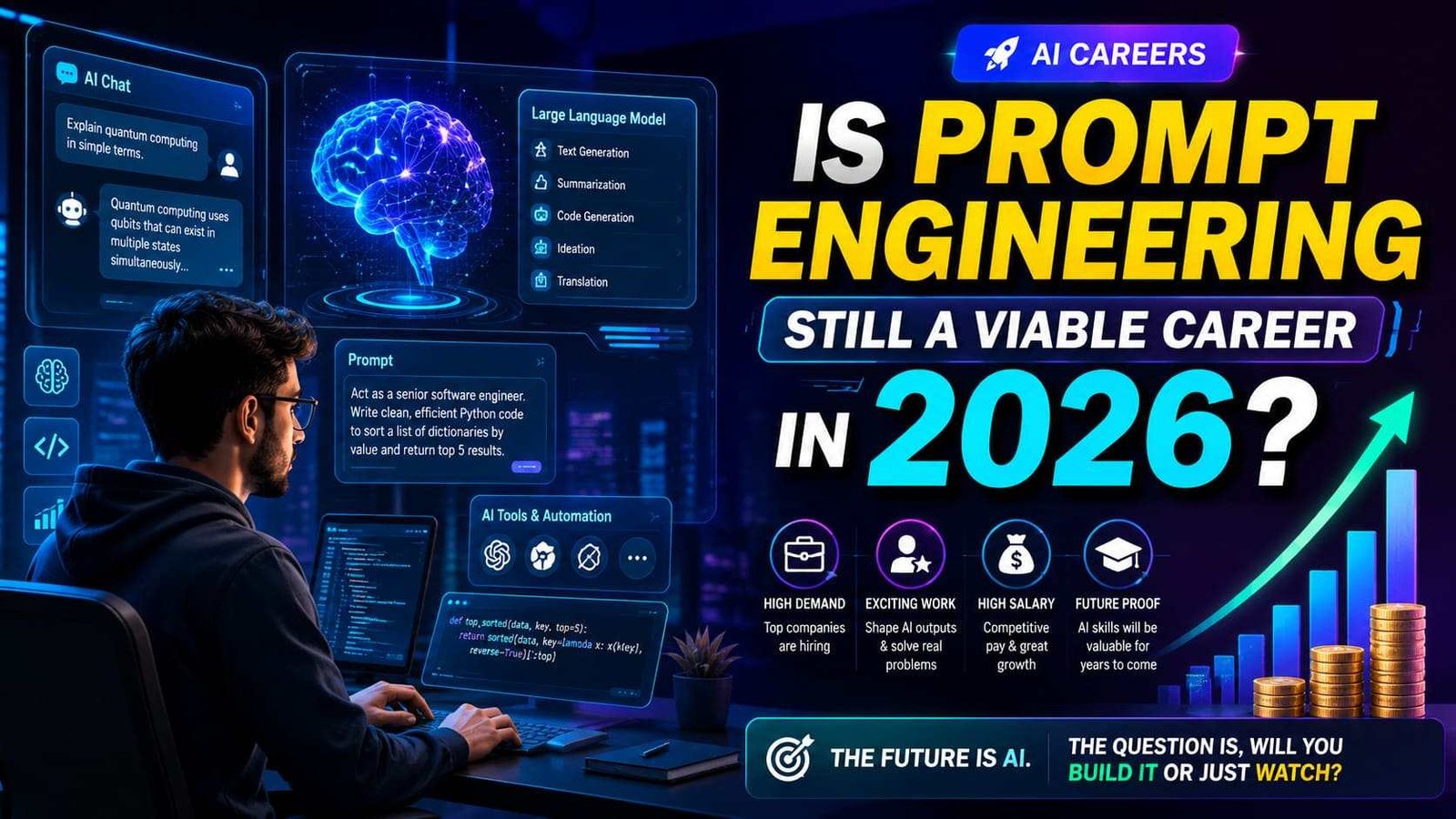
Prompt Engineering! The tech world moves fast, but the last two years have felt like a decade compressed into a caffeine-fueled fever dream. In late 2023, the term “Prompt Engineer” was splashed across headlines, with some companies waving $300,000+ salary bands to attract anyone who could fluently speak to GPT-4. It was hailed as the job of the future a career that required no coding, no complex math, just a knack for clear English and a dash of structured creativity. The narrative was seductive: you could bridge the gap between raw, chaotic human thought and cold, logical machine processing just by knowing how to type polite instructions.
Fast forward to 2026, and the hype bubble has inevitably burst. The emergence of autonomous AI agents, massively upgraded context windows, and “reasoning” models like OpenAI’s o3 and Google’s Gemini 2.5 Pro have changed the field entirely. The machines no longer need you to hold their hand. However, declaring the career “dead” is a lazy, surface-level take. The truth is far more nuanced. Prompt engineering hasn’t died; it has matured, evolutionizing from a standalone party trick into a core competency woven into the fabric of every technical role. If you’re asking whether prompt engineering is still a viable career, the answer isn’t a simple yes or no it’s a career that now requires a stack of complementary skills to survive.
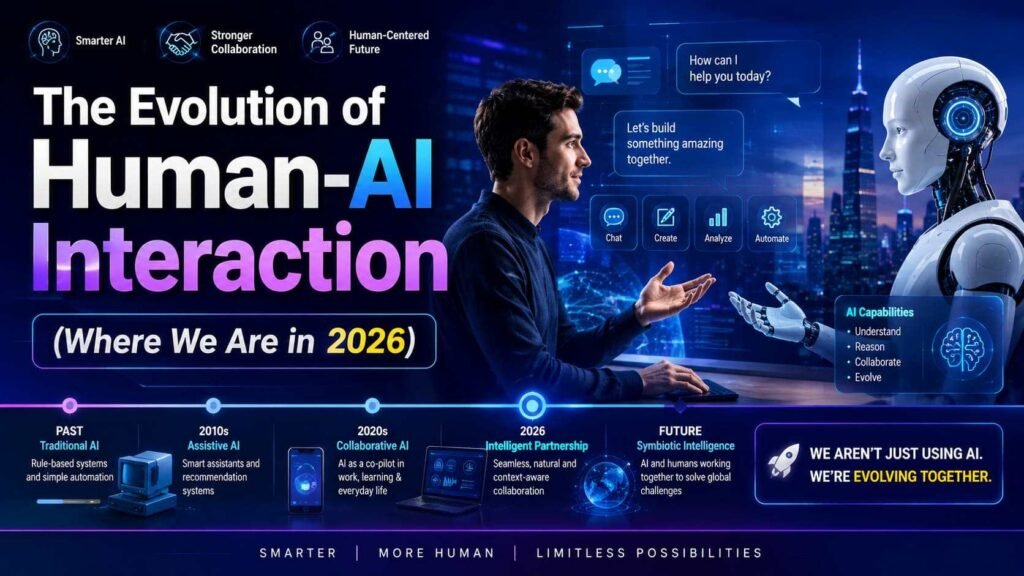
The Evolution of Human-AI Interaction (Where We Are in 2026)
To understand the viability of the career, we have to look backward before we look forward. The job market for AI fluency in 2026 looks nothing like it did when GPT-4 first launched, and treating it as a static discipline is the fastest way to becoming obsolete. The industry has undergone a structural shift in how we interface with machines, moving from rigid syntax to fluid, natural conversation that automatically optimizes itself.
From Zero-Shot Prompting to Automatic Reasoning
In the early days, you had to beg the model to “think step by step” just to solve a basic math problem. If you forgot those magic words, the AI might confidently tell you that 2+2=5. This was the era of explicit instruction. Fast forward to 2026, and the concept of explicitly writing out chain-of-thought prompts feels archaic. Meta’s Llama 4 and DeepSeek-R1 have baked deep reasoning directly into the inference layer.
The machine now interrogates its own logic internally before it gives you an answer. This shift has killed the “magic phrase” market. You no longer need a specialist who memorized that adding “take a deep breath and work this out” increases accuracy by 8%. The AI does this subterranean optimization by default. This doesn’t mean your input is irrelevant, but the center of gravity has moved from tricking the model to properly scoping the problem’s context.
The Rise of Multimodal and “Vibe Coding”
If the text-based prompt engineer wasn’t already sweating, the multimodal explosion finished the job. In 2026, we aren’t just typing. We are uploading screenshots of Figma files, noisy voice recordings, and shaky videos of server rooms and saying, “Fix this.” The concept of “Vibe Coding,” as popularized by Andrej Karpathy, has taken hold, where the entire software development process involves describing a problem, letting the AI generate the code, and running it without ever looking at a line of logic unless it breaks.
This is directly related to the massive shift we discussed in our guide on the future of coding and vibe coding with AI in 2025. The job is less about syntactic prompting and more about system-level design taste. A prompt engineer who can’t “feel” when the code is architecturally unsound, even if the syntax is correct, isn’t an engineer they’re just a user.
The Death of the “Prompt Artist” and the Birth of the AI Orchestrator
This is the most critical headline of 2026. The standalone, “I write prompts for a living” freelancer is currently facing an extinction event. However, the “AI Orchestrator” a professional who combines prompt logic with operational business acumen is in higher demand than ever. The gold rush mentality has shifted from raw generation to sophisticated quality control and guardrails.
Why Generic Prompt Skills Are No Longer Enough
Two years ago, you could sell a “Mega-Pack of 1000 ChatGPT Prompts” on Gumroad and make a comfortable living. In 2026, the models have seen these generic prompts. Moreover, context windows are now so massive (Google’s Gemini models routinely handle 1 million to 2 million tokens) that the AI can ingest an entire corporate legal library and write a contract without needing a “lawyer prompt” template. The AI no longer needs a rigid, skeletal structure; it needs a comprehensive, nuanced brief.
If your entire value proposition rests on knowing how to use delimiters (like triple backticks) to separate data from instruction, or knowing what temperature setting to use, you’ve already been automated. These are now default settings or handled by meta-prompting layers. The market has correctly identified that knowing how to talk to a genius intern doesn’t make you a CEO. To survive, you must transition into managing workflows that involve dozens of AI calls chained together, which we have previously described as the core function of generative engine optimization reshaping SEO.
The Shift to End-to-End Workflow Automation
The real money in 2026 isn’t in single-turn brilliance; it’s in multi-turn reliability. Companies don’t need a poem. They need a RAG (Retrieval-Augmented Generation) pipeline that reads their 500-page internal wiki, understands customer sentiment from a CRM, and drafts a personalized email that doesn’t sound robotic.
This requires a prompt engineer who understands vector databases and schema design. You don’t necessarily need to build the database with Python, but you must understand why chunking data into 256-token segments returns worse results than semantic, paragraph-based chunking. The viability of your career correlates directly with your understanding of the “plumbing” around the prompt, not just the prompt itself.
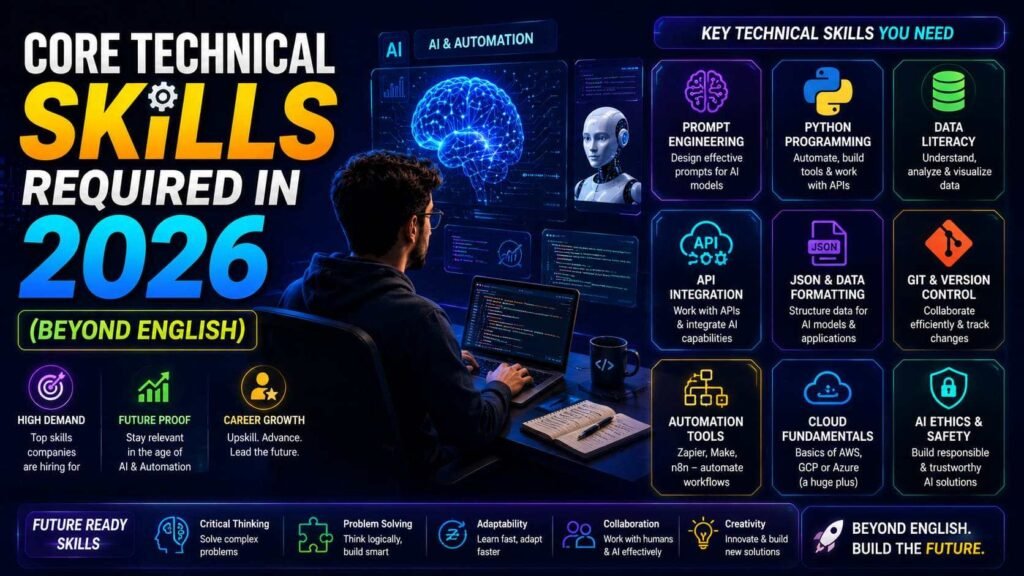
Core Technical Skills Required in 2026 (Beyond English)
If we are honest, calling it “engineering” in 2023 was a stretch. It was technical writing with a temperamental machine. In 2026, the title is finally earning its weight because a true Prompt Architect now needs to operate at the infrastructure level, ensuring that what we covered in our article on invoice approval automation workflows runs without breaking due to a hallucination.
Advanced Python and API Integration
This is the non-negotiable pivot. If you’re allergic to code, your ceiling in this industry is painfully low. The modern prompt engineer doesn’t use the ChatGPT web interface; they use the API playground. Why? Because manual copy-pasting doesn’t scale.
Let’s say you’re generating product descriptions for a catalogue of 10,000 SKUs. A viable professional writes a Python script that loops through a CSV file, feeds the data into a structured prompt template programmatically, and catches errors with a try-except block when the API rate limits hit. You need to understand asynchronous programming to fire off 50 requests simultaneously rather than waiting for one to finish before starting the next. If you cannot write a Python script to benchmark 10 different prompt variations across temperature ranges of 0.0 to 1.0 automatically, you are a manual tester in a world that requires automation engineers.
Dynamic Few-Shot and DSPy Frameworks
The old way of doing few-shot learning was to jam three examples into the system prompt and hope for the best. As context windows grow, this becomes terribly expensive and often degrades the model’s attention on the critical middle point of the prompt (the “lost in the middle” problem).
The 2026 standard is dynamic few-shot selection. This involves using a retriever (often a lightweight embedding model) to search a database of historical, high-quality examples and only injecting the most relevant examples into the prompt for that specific task. If the user asks a tax question, you dynamically fetch tax examples, not medical ones.
Frameworks like DSPy (Declarative Self-improving Python) have matured to a point where you no longer manually write “The answer is…” Instead, you compile an optimizer that automatically generates the best possible prompt structure for a given metric. Understanding how to use DSPy to beat a hand-crafted prompt is the new certification that matters.
| Prompting Era | Core Skill | Complexity | Automation Level |
|---|---|---|---|
| 2023 (Manual) | Chain-of-Thought, Role Assignment | Low | Copy/Paste |
| 2024 (Structured) | JSON Mode, RAG Chunking | Medium | LLM Chains |
| 2025 (Agentic) | Function Calling, Tool Use | High | Autonomous Agents |
| 2026 (Optimized) | DSPy Compilers, Dynamic Retrieval | Expert | Self-Improving Loops |
Industry-Specific Applications and Niche Security
Saying “I can write prompts” in a generalist vacuum is a quick route to unemployment. Saying “I use LLMs to automate the legal discovery process” is a ticket to a $200,000 salary. The viability of this career in 2026 is pinned to vertical specialization. You must dive deep into an industry that historically hates change but has high friction data.
Complex Legal, Medical, and Financial Prompting
These sectors are the holy grail because they don’t tolerate “almost correct.” A marketer who uses AI to brainstorm blog titles for a campaign about how to rank news articles quickly can survive if the AI is 90% creative. A radiologist cannot survive if the AI misses a tumor 10% of the time.
Prompt engineering here is about constraint-based generation. You aren’t just asking for a summary; you are architecting a safety barrier. This involves “NeMo Guardrails” or proprietary layers that screen outputs against regulatory databases in real-time. A single hallucinated citation in a legal brief can end a case. Thus, the prompt must instruct the model to ground every claim with a pinpoint citation and, more importantly, a secondary prompt must act as a verifier to check that the cited source actually says that exact thing. This “Actor-Critic” architecture is the skill that a medical AI startup pays top dollar for in 2026.
Government and Public Sector AI Deployment
The U.S. Department of Defense and various federal agencies are aggressively hiring “AI Interaction Designers.” This is not corporate branding; it’s prompt engineering for highly sensitive, air-gapped models. Here, the viability isn’t driven by creativity but by adversarial robustness. A prompt engineer in this sector spends their day trying to jailbreak their own system to find vulnerabilities before foreign entities do.
You need to understand how to write system prompts that resist “many-shot” jailbreaking, where an attacker artificially fills the context window with fake dialogue history to override safety training. This is a cat-and-mouse game that pays exceptionally well because the stakes are national security, not click-through rates. The deep understanding required to analyze AI safety is something we also explore when looking at human creativity vs. AI in 2025, where the unique value of human oversight becomes clear.
The Economics of the Prompting Job Market
Let’s talk about the reality of your wallet. Is the freelance market for prompt engineering saturated? Absolutely. Is the enterprise market saturated? Absolutely not. We are seeing a massive bifurcation in compensation.
Salary Trends and The Freelance Bloodbath
On platforms like Upwork and Fiverr, “Prompt Engineers” from regions with a lower cost of living have flooded the market, driving the price of a generic prompt to single digits. This is a race to the bottom you cannot win if your only skill is English fluency. The algorithm has commoditized the basics.
However, look at full-time enterprise roles. Job titles have shifted from “Prompt Engineer” to “AI Reliability Engineer” or “LLM Ops Specialist.” Salaries are robust, ranging from $150,000 to $250,000 plus equity, not because they’re paying for your typing skills, but because they’re paying for risk mitigation. A single “prompt injection” attack on a customer-facing chatbot (like a car dealership bot that gets tricked into selling a $50,000 truck for $1) can cause viral legal and reputational damage. Companies pay a premium for professionals who can build a prompt architecture that is mathematically provable to stay within defined boundaries.
The Integration with SEO and Digital Marketing
One of the most lucrative yet under-hyped corners for prompt engineering survival in 2026 is programmatic SEO. AI-generated content is only penalized by Google when it’s lazy, unreviewed slop. Programmatic content that is guided by intricate prompt chains where a master prompt creates an outline, a sub-prompt analyzes top-ranking pages for entity gaps, and a third prompt injects unique statistical analysis is dominating SERPs.
The prompt engineer here acts as a data sculptor. They don’t write 1,000 articles; they craft the system that generates 1,000 distinct, data-rich tables that answer user intent. For instance, creating a comparison table of specs for a Samsung Galaxy S25 Edge generated by a human might take an hour. A prompt chain can generate a personalized comparison based on the user’s current device in milliseconds. The value lies in designing the logical graph of the prompt, not the output text. This directly ties into the sophisticated strategies discussed in our guide for top SEO techniques to skyrocket your traffic in 2025, where content architecture is key.
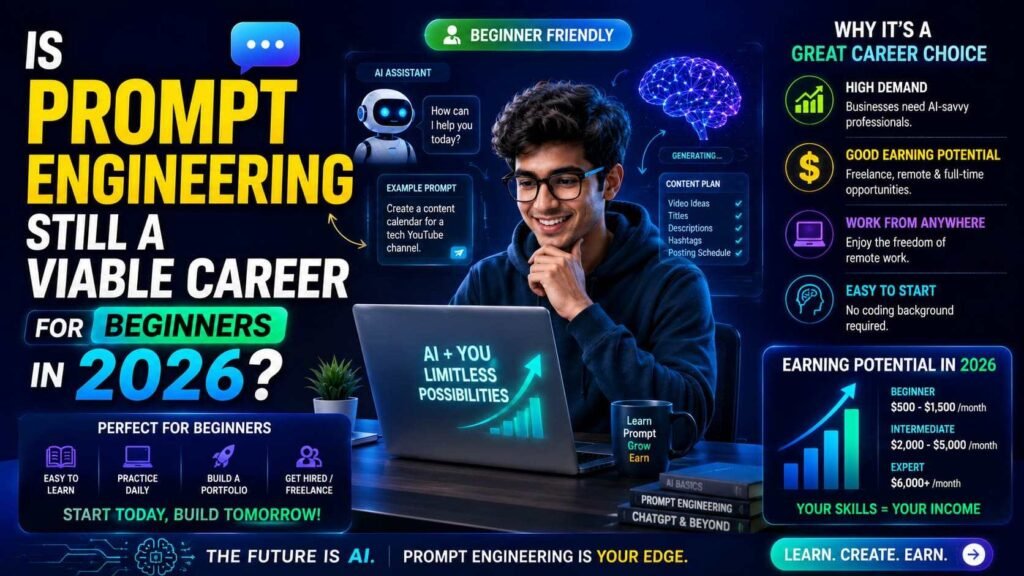
Is Prompt Engineering Still a Viable Career for Beginners in 2026?
If you are hearing about this career for the first time today, you face an uphill battle, but the path isn’t closed. You simply cannot start where the 2023 experts started. You have to skip the old manual class.
Building a Portfolio That Gets Noticed
If you send a hiring manager a PDF with screenshots of your ChatGPT conversations, you will be rejected. If you send them a public GitHub repository containing a Streamlit app, that’s a different story.
Your portfolio for a prompt engineering role in 2026 must include:
- An Evaluation Framework: A Python notebook that pits LangChain against DSPy for a specific classification task, proving which one reduced hallucinations by 12% on a test set.
- A Multi-Agent Simulation: Show them you can make two AI personas talk to each other to solve a logic puzzle. This demonstrates an understanding of state management.
- A Cost Analysis: A report showing how you switched from GPT-4o to Claude 3.5 Haiku for specific tasks and slashed inference costs by 60% without sacrificing accuracy.
You need to prove you are an optimizer, not just a user.
The Obsolescence Timeline: How Long Do We Have?
This is the elephant in the room. Are we building a career that will last 5 years, or is this all going to be wiped out by Artificial General Intelligence (AGI)? The consensus in the industry is that human-in-the-loop prompting has a robust shelf-life for specific “long-tail” edge cases, but the generalist role will be heavily automated by autonomous agents like “Devin” or “AutoGPT” successors within the next 3-5 years.
Your career security relies on tackling the “last mile” problems that are too chaotic for AI to handle autonomously. An AI can generate a perfect blog post, but it doesn’t know that the CEO hates the color blue and will fire you if blue is in the header. An AI doesn’t sit in on the Zoom call where the marketing director sighs and says, “I don’t know, it just feels off.” The career is viable only if you act as the sensory organ for the AI feeding it the unwritten, unspoken, contextual nuances of the messy human business world.
Conclusion
Prompt engineering is undeniably dead if your definition of the job is a glorified texter who types complex riddles into a black box. That low-hanging fruit has rotted. AI models are no longer oracles you need to persuade; they are junior colleagues you need to manage, audit, and architect infrastructure for. However, for the technically savvy professional who treats language models as a raw compute material to be sculpted with code, APIs, and rigorous evaluation frameworks, the career has never been more viable. In 2026, it’s no longer a standalone job title; it is a critical competency. Stop trying to be a “Prompt Engineer.” Instead, become a great software engineer, a great marketer, or a great product manager who happens to wield prompts with surgical precision. The tool changed, but the rule remains: the value isn’t in asking the question; it’s in knowing what the answer should look like, and then automating the path to get there flawlessly.
