

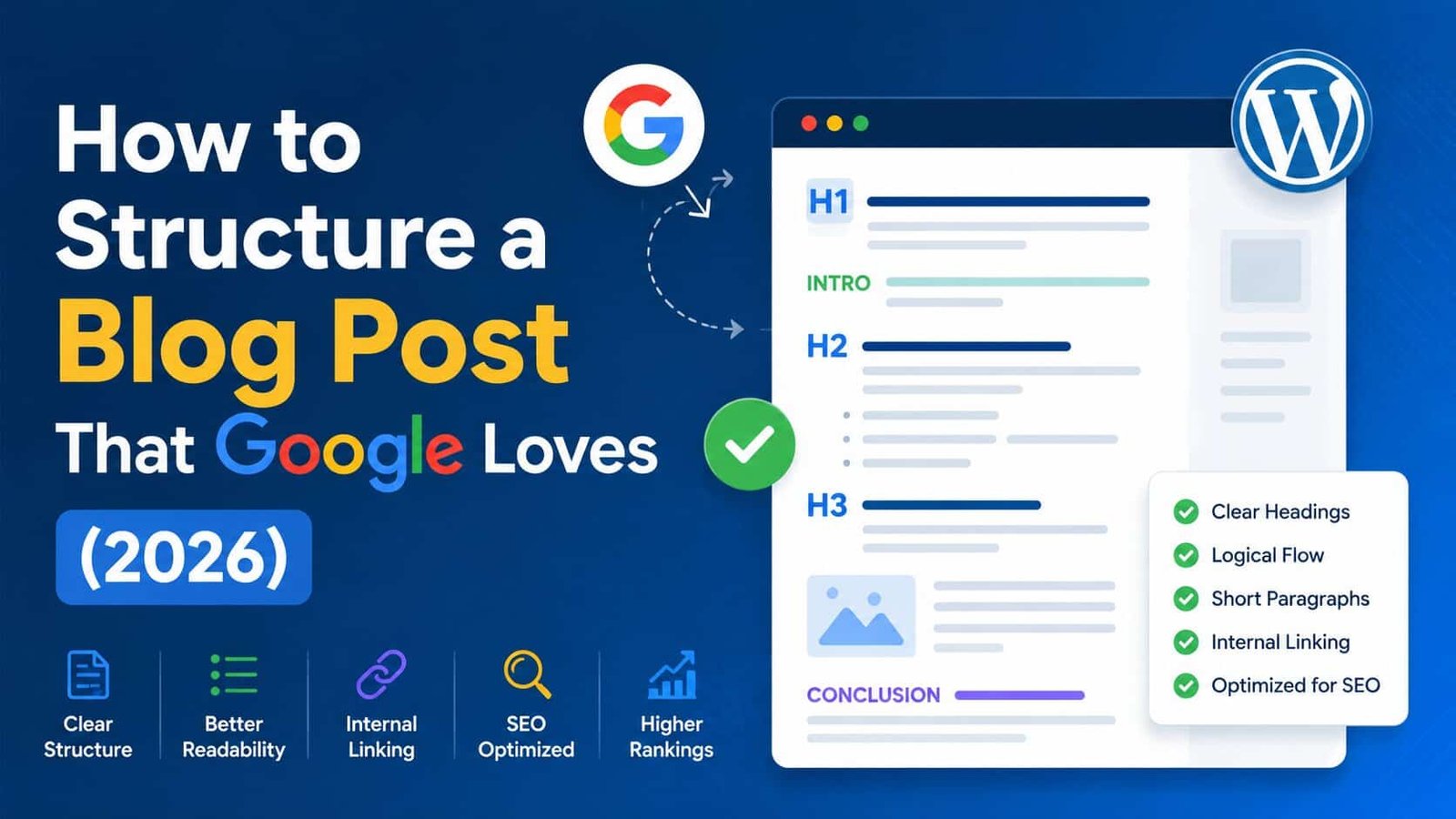
Ranking on Google in 2026 isn’t about stuffing keywords or writing 5000-word novels that nobody reads. It’s about respect respecting the reader’s time and Google’s obsession with relevance. When you learn how to structure a blog post that Google loves, you essentially become an information architect who builds bridges between a user’s question and the perfect answer. The algorithm has evolved far beyond simple string matching; it now analyzes semantic depth, heading relationships, and behavioral signals like dwell time and scroll depth to determine if your content actually solved the problem.
The brutal truth is that most bloggers still write like it’s 2015 dense paragraphs, vague subheadings, and zero visual hierarchy. If your content doesn’t immediately signal “I have exactly what you need,” both the reader and the crawler will abandon you within seconds. This guide breaks down a modular, human-centric framework that balances algorithmic precision with genuine readability. We’ll cover structural anatomy, semantic SEO, scannable formatting, and the technical layers that make Google trust your page enough to put it on page one.
Understanding What “Structure” Means to Google
Structure isn’t about making things look pretty. It’s the logical skeleton that helps Google parse your document, understand relationships between concepts, and serve your content to the right audience. This section lays the groundwork by explaining why organization matters just as much as the words themselves.
The Difference Between Good Writing and Good Structuring
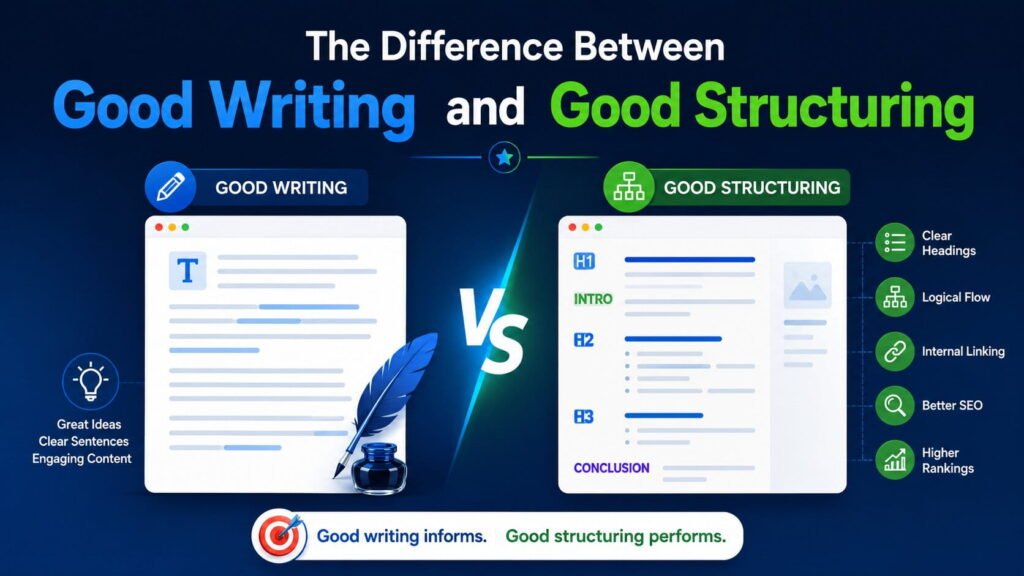
Good writing engages emotions; good structuring organizes logic. You can write beautiful prose, but if your headings don’t form a clear hierarchy and your paragraphs run unchecked, Google’s crawler gets lost. Structure is the strategic arrangement of H1, H2, and H3 tags that creates a scannable table of contents for both humans and bots. It’s about breaking complex topics into digestible chunks that follow a natural progression, ensuring each section builds on the last. When you master this, your content becomes modular, allowing readers to jump to exactly what they need without friction.
Why Google’s Algorithm Rewards Logical Flow
Google’s primary mission is to simulate a librarian who instantly finds the exact page containing your answer. When your post follows a logical flow, crawlers can map your subheadings to parent topics, building a semantic graph of understanding. This tight organization reduces crawl waste and helps your content get indexed faster, something I’ve verified repeatedly using a rapid URL indexer to test how structured content outperforms messy pages. A logical flow also boosts dwell time because users aren’t confused; they smoothly scroll from problem to solution, sending positive behavioral signals straight back to the algorithm.
Matching Structure to Search Intent
Intent dictates architecture. An informational query like “how to bake a cake” needs a sequential step-by-step structure with ingredient lists and timed stages. A commercial query like “best laptops 2026” demands comparison tables, spec breakdowns, and verdict boxes. Misaligning these is fatal nobody wants a history lesson when they’re ready to buy. Before outlining a single heading, identify whether your target keyword is informational, navigational, commercial, or transactional. This intent-first approach ensures your structure matches the psychological state of the user, dramatically increasing the likelihood of conversion, whether that’s a click, a signup, or a purchase.
The Anatomy of a Blog Post That Ranks
Now we get surgical. A perfectly optimized post has distinct anatomical parts that work together like organs in a body. From the hook that grabs attention to the conclusion that closes the loop, every element needs a specific purpose. When these parts are assembled correctly, you create a content machine that satisfies both the skimmer and the deep reader.
The Introduction: Hook, Bridge, and Roadmap
Your introduction cannot afford to be boring. Start with a visceral hook that either agitates a pain point or promises a breakthrough something that makes the reader’s brain say, “Yes, this is exactly my problem.” The bridge connects that pain to your expertise, establishing empathy and authority in just two sentences. Finally, present a roadmap: a quick preview of what you’ll cover, which acts as a psychological agreement that scrolling further will reward them. This three-part formula doesn’t just introduce the topic; it builds momentum and reduces bounce rate by setting clear expectations right out of the gate.
The Information-Rich Table of Contents
A clickable Table of Contents right after the introduction is a conversion multiplier. It instantly shows readers the depth of your answer and lets them jump to relevant sections, improving accessibility and user satisfaction. For Google, a well-linked TOC often generates sitelinks in the SERPs, expanding your organic real estate significantly. It also reinforces your heading hierarchy, giving crawlers a second pass at understanding your topical coverage. Don’t hide this behind design flair; make it prominent and functional, because a transparent structure signals confidence and authority before the reader even reaches the body.
Heading Hierarchy: H2s and H3s as Load-Bearing Beams
Think of H2s as chapter titles and H3s as subplots within those chapters. Each H2 should address a major pillar of your topic, while H3s break that pillar into specific, digestible subtopics. This hierarchy isn’t just for aesthetics it creates a nested semantic structure that helps Google understand the relationship between broad concepts and granular details. A strong H2 makes a promise, and the paragraphs beneath it fulfill that promise. When you inject semantic keyword variants naturally into these headings, you signal topical depth without keyword stuffing, directly influencing how your page gets evaluated by ranking algorithms.
Building a Body That Readers Actually Consume
The body is where most bloggers lose their audience. Walls of text are the enemy; visual breathing room is the ally. Modern readers don’t read they scan, stop at interesting anchors, then dive deeper. Your job is to create those anchors strategically.
The One-Idea-Per-Paragraph Rule
Long paragraphs are cognitive burdens. The human brain processes the white space at the end of a line as a micro-reward, encouraging continued reading. By limiting each paragraph to one core idea, you create a rhythm that makes content feel effortless. On mobile devices where over 60% of searches happen a four-sentence paragraph becomes an intimidating wall of text. Short, punchy paragraphs also make your content easier to translate for voice search and AI overviews, which pull concise answers from well-structured sections. This simple rule dramatically improves readability scores and keeps users scrolling.
The Power of Bullet Points and Numbered Lists
Lists are the ultimate scannable tool. When you present information as bullet points, you instantly signal “quick value” to a skimming brain, increasing the odds they’ll stop and actually read. Numbered lists add progression logic, which works brilliantly for steps, rankings, or priority sequences. Google often pulls well-formatted lists directly into featured snippets, giving you position zero. But don’t overuse them; lists should punctuate your prose, not replace it entirely. A balanced mix of narrative paragraphs and strategic list breaks creates the perfect visual rhythm for modern blog posts.
Tables: When Comparison Drives Clarity
For any content involving comparisons products, strategies, pricing models tables are unmatched. They compress multidimensional data into a scannable grid, allowing instant side-by-side evaluation.
| Structural Element | SEO Benefit | User Benefit |
|---|---|---|
| Descriptive H2/H3 Tags | Helps crawlers map semantic relationships and index content accurately. | Enables quick navigation; users find relevant sections in seconds. |
| Bullet Points & Lists | High chance of being pulled into featured snippets or PAA boxes. | Reduces cognitive load; key takeaways are instantly visible. |
| Short Paragraphs | Improves dwell time and lowers bounce rate, boosting behavioral signals. | Creates a smooth mobile reading experience without visual fatigue. |
| Embedded Data Tables | Targets comparative keywords; structured data adds rich snippet potential. | Delivers dense information without requiring deep reading. |
Semantic SEO The Invisible Layer Google Loves
Keywords alone are dead. Modern SEO revolves around entities, topics, and the semantic relationships between them. This layer is invisible to casual readers but loud and clear to search engines.
Beyond Keywords Entities and Topical Depth
Google’s Knowledge Graph understands that “Apple” is a fruit, a company, and a record label depending on context. Your content must build similar clarity. Instead of repeating a keyword robotically, surround it with related entities and concepts that reinforce the topic. If you’re writing about blog structure, terms like “readability metrics,” “dwell time,” “schema markup,” and “header hierarchy” should appear naturally. This entity clustering proves to the algorithm that you’re covering a topic comprehensively, not just skimming the surface for ad revenue. It’s what separates thin content from authoritative pillar pages.
Leveraging “People Also Ask” for Heading Ideas
The “People Also Ask” box is a direct line into Google’s understanding of your topic. Each question in that box represents a verified user query that deserves its own H2 or H3 section. By extracting these questions and answering them concisely under dedicated subheadings, you essentially reverse-engineer Google’s content expectations. This method guarantees your post covers what real users are asking, improving relevance scores dramatically. It also increases your chances of appearing in the PAA accordion itself, creating a powerful loop of visibility and authority for your domain.
Internal Linking as a Semantic Bridge
Internal links aren’t just navigation; they’re relevance signals. When you embed a contextual link deep within a paragraph using descriptive anchor text, you tell Google, “This related page expands on this specific concept.” This distributes authority across your site and strengthens the topical cluster. For example, discussing structural frameworks naturally connects to broader strategies about how to rank higher on Google, creating a content web that search engines love. A chaotic internal linking strategy cannibalizes keywords; a strategic one lifts your entire domain’s authority.
Technical Signals That Support Your Structure
You can architect the most beautiful post, but if it loads slowly or lacks schema, Google won’t trust it. Technical SEO is the scaffolding that holds your structure upright under algorithmic pressure.
Schema Markup: Translating Structure for Crawlers
Schema markup is the machine-readable translation of your content structure. Article schema tells Google this is a blog post; FAQ schema turns your Q&A sections into rich results; HowTo schema highlights your step-by-step procedures. Without schema, your carefully crafted headings and lists are just raw HTML that crawlers must interpret blindly. With schema, you’re packaging your content as a structured data object, dramatically increasing the chances of rich snippet appearances. In 2026, with AI overviews dominating SERPs, schema is no longer optional it’s the minimum entry requirement for visibility.
Core Web Vitals and Visual Stability
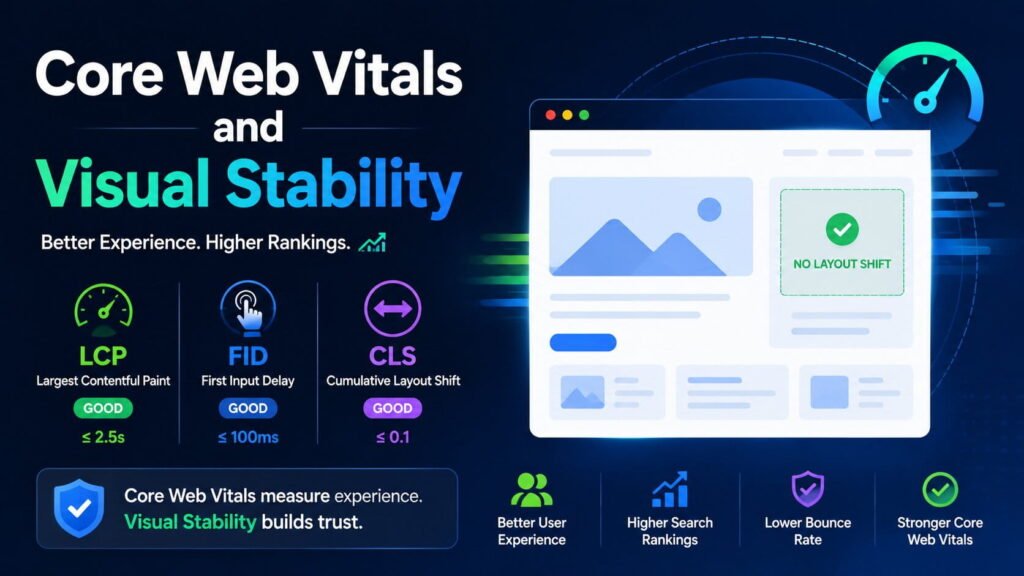
A janky page destroys trust instantly. If your beautifully structured headings shift around as ads load (poor Cumulative Layout Shift), users will misclick and bounce. If your Table of Contents takes two seconds to become interactive, the user experience feels broken. Core Web Vitals LCP, INP, and CLS directly measure the stability and responsiveness of your structure. By optimizing image dimensions, reserving space for embeds, and minimizing render-blocking JavaScript, you create a perfectly rigid canvas that feels premium and trustworthy, signaling to Google that your page deserves top-tier placement.
Speed Optimization and Caching Layers
Dynamic websites often slow down under traffic because every page request triggers database queries. Advanced caching creates static HTML snapshots of your structured content, serving them instantly without rebuilding the page. For WordPress users, the choice of caching plugin can make a 2-second difference in load times. I’ve run extensive comparisons on this, and the results are eye-opening; check this Cloudflare APO vs FlyingPress speed race analysis to see how much caching layers impact your structural delivery. A fast page keeps your bounce rate low and your rankings climbing.
Practical Frameworks You Can Use Today
Theory becomes power when applied. Here are two battle-tested structural templates you can adapt immediately for different content types. They’ve consistently generated featured snippets and strong dwell-time metrics across competitive niches.
Framework 1: The Step-by-Step How-To
This framework works for tutorials, recipes, and technical guides. Start with a “Prerequisites” section listing required tools or knowledge. Then, each major step becomes an H2 heading with an action-oriented title. Under each H2, explain the “how” in clear prose, followed by a short “Why This Works” callout that adds depth. Finally, include a troubleshooting H2 addressing common mistakes. This layered approach satisfies beginners who need hand-holding and intermediates who want theory, maximizing time on page and signaling comprehensive value to Google.
Framework 2: The Curated Listicle
A list post in 2026 must justify its selections. Open with a “How We Chose” section explaining evaluation criteria this builds instant trust and filters skepticism. Each list item then becomes an H2 featuring a mini-breakdown: a one-line summary, a quick pros/cons snapshot, and a “Best For” verdict. This uniform sub-structure lets users compare complex options horizontally, transforming a simple list into a decision-making tool. For visual content in posts like these, having properly sized, fast-loading images matters; a reliable free online image converter tool helps compress screenshots without quality loss, keeping your Core Web Vitals green.
Avoiding Structural Mistakes That Kill Rankings
Even good posts fail because of fixable structural errors. Awareness is half the battle; the other half is ruthless editing against these common pitfalls.
The Wall of Text Syndrome
Nothing kills engagement faster than unbroken paragraphs stretching 10-15 lines. On mobile, these become impenetrable walls that trigger immediate exits. Break text every 3-4 sentences, even if grammar purists object. Use images, quotes, or embeds as visual circuit breakers. Your goal is a rhythmic ebb and flow between dense information and breathing room, creating a reading experience that feels light despite covering heavy topics.
Heading Stuffing and Hierarchy Chaos
Skipping from H2 to H4 without an H3, or jamming keywords into every heading unnaturally, confuses crawlers and readers alike. Maintain a strict numerical hierarchy: H1 (title) → H2 (major sections) → H3 (subtopics). Never use headings for styling purposes alone; they must carry semantic weight. A messy hierarchy is like a book with random chapter numbering disorienting and unprofessional. Consistency here reflects content maturity and editorial rigor.
Weak Conclusions That Don’t Close the Loop
An abrupt ending leaves readers hanging and truncates dwell time. Your conclusion should synthesize the key takeaways without copy-pasting earlier lines. Reiterate the core problem and your solution, then give a clear next step whether that’s a comment prompt, a related article link, or a downloadable resource. A strong conclusion signals content completeness, which Google interprets as a satisfying page experience that deserves to maintain its ranking position.
Conclusion
The era of writing first and structuring later is over. In 2026, structure is the content it’s the delivery mechanism that determines whether your expertise ever gets seen. When you combine a logical heading hierarchy, scannable paragraphs, semantic depth, and clean technical delivery, you create a content asset that Google can’t ignore. Every section, every subheading, every bullet point must justify its existence by serving the reader’s intent and making the algorithm’s job easier. This isn’t about gaming the system; it’s about architecting information so well that ranking becomes a natural byproduct. Start treating every post as a mini-product with its own UX design, and you’ll watch your organic traffic climb not through luck, but through deliberate, replicable excellence.
